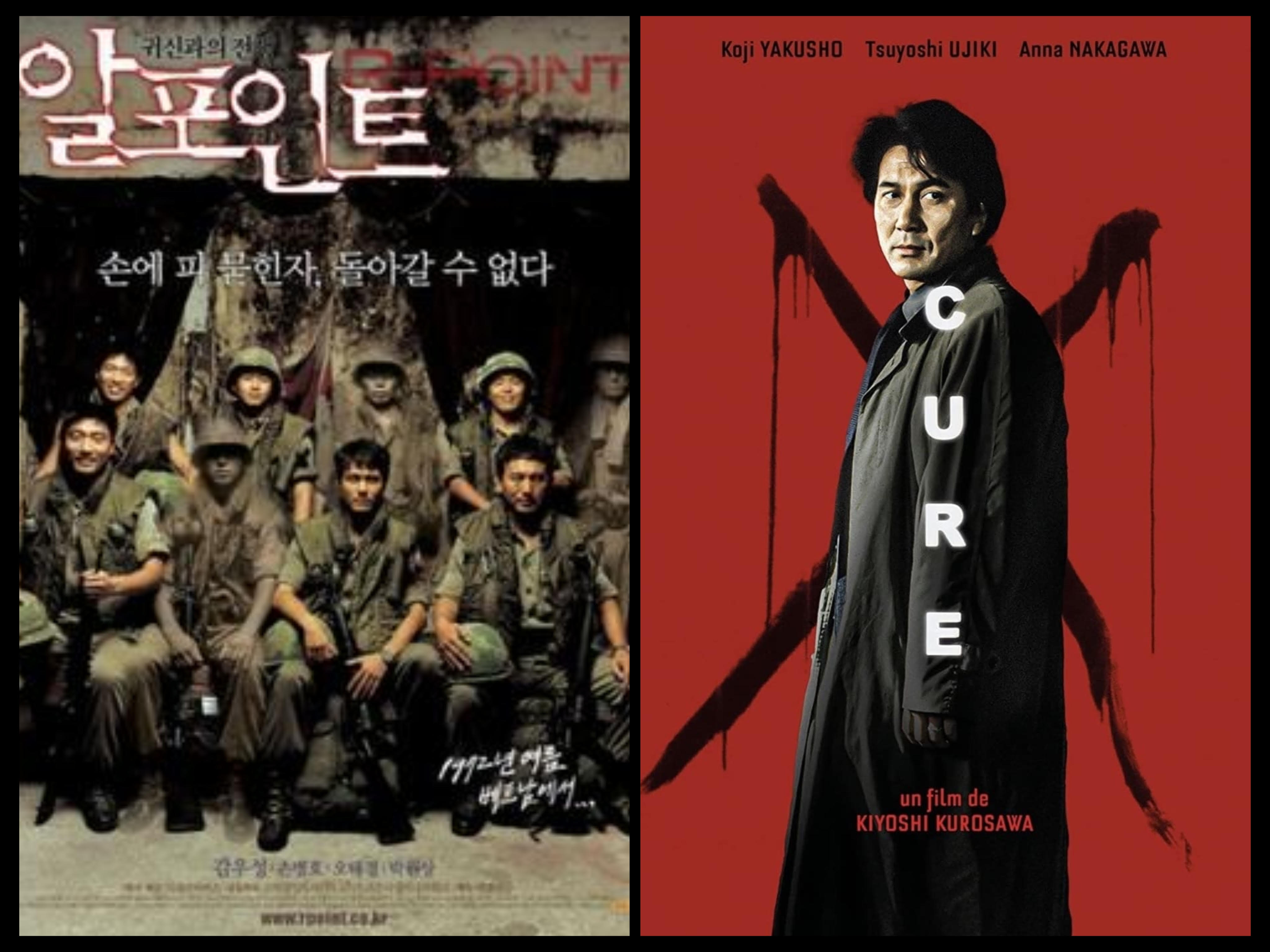
R-Point (2004): A South Korean base receives a radio transmission from a missing squad, presumed dead, and sends a platoon to rescue the lost squad from the R-Point.
Cure (1997): A detective investigates a string of murders where the killers have no memory of the crime, eventually leading him to a mysterious drifter who seems to hypnotize people into acting on their darkest impulses.
___
First, a disclaimer, supernatural horror movies are not my cup of tea. I wouldn’t say the same when it comes to books, series or manga. When it comes to movies, I hate being bombarded with jumpscares, especially if they are not rewarding, as I am sensitive to sound.
After watching Cure, I finally understand why most Hollywood Supernatural horror productions usually don’t sit well with me, and why movies like The Others (2001) and Sixth Sense (1999) have become such rare gems and masterpieces in my eyes.
This realization came with how frustrated I was reading people’s takes on R-Point on Reddit and how they took it to a totally wrong direction. Everybody talked about the female Viet ghost who went around killing soldiers, and I was like, “Wait a minute, did you people forget the clues given in the very start? ‘Those with blood in their hands won’t be able to leave the site’? And how the female ghost only appeared in the Lieutenant’s vision, while others saw different apparitions or dealt with different terrors? Why do we have to have a single villain here?“
Poor female ghost. Here’s the thing, you couldn’t even bet she was real or a manifestation of guilt by the lieutenant from having his previous crews slaughtered and for shooting a female Viet assassin. Others saw different things: the appearance of a friend who was among the soldiers in the previously missing platoon, harboring guilt for lying to him about something. The second-in-command guy had a secret mission that allowed him to desert the lieutenant once he got to the bottom of the issues. And in this cursed land, they all have to face (or be punished for) their sins and deep-seated guilt.
The frustration I feel with horror movies, especially the Western ones, is how often they present a ghost or a monster that the protagonists simply have to fight for survival. That’s it. There is no room for analysis, no story to contemplate. The horror is external—an intruder you have to shoot, burn, or run away from.
Meanwhile, movies like The Others, The Sixth Sense, and many East Asian movies (like Cure) deal more with character development or social/situational phenomena. They force you to look within yourself. The horror serves as symbolism for a greater cause—grief, acceptance, trauma, or societal problems.
In R-Point, the soldiers weren’t fighting a ghost; they were fighting the guilt of their own actions in war. In Cure, it’s not about catching a serial killer; it’s about the darkness that exists in everyone, waiting to be unlocked.
A little theory here, rooted in Buddhist/Shinto concepts of karma and disharmony, East Asian horror often comes from within (social repression, isolation, failure of duty). In Cure, the horror isn’t the “killer”—it’s the contagious idea of social breakdown. There is often no “winning,” only endurance or submission.
On the other hand, historically rooted in Christian dualism (Good vs. Evil), Western horror presents an external invader (monster, demon, slasher). The plot revolves strictly around survival and defeating the invader to restore order. Character development is often sacrificed for pacing and survival mechanics.
East Asian horror is closer to home, sure. But I won’t negate the presence of jumpscare fillers and single villain in some of its most celebrated titles like Ring and Ju-on, although Ring0 is among the ones that made me realize contemplative horror does exist, and Shimizu has more to offer with his other works outside Ju-on like Reincarnation and Howling Village.
The Other and Sixth Sense, both of which are my favorites from the genre, are Western productions. And let’s not deny the evolution of Western horror with Get Out, Hereditary, etc. But the evolution is yet to become a prospective economic model when compared to how much franchises like The Nuns profited.
It’s the “Supply vs. Demand” of the box office. It seems like the industry is stuck in a loop. Hollywood keeps supplying these “fight for survival” jumpscare factories because that is what the easy “demand” is—it’s safe box office money. They think the audience just wants the adrenaline rush of a loud noise and a scary face.
But that creates a self-fulfilling prophecy where the supply of “smart” horror is artificially low. It’s why when a movie like Get Out or The Sixth Sense comes along—movies that actually have something to say about society or the human condition—they feel like miracles. The industry assumes we don’t want to think, but Cure proves that the scariest things are the ones that make you think too much, even after the credit rolls.
I am not against jumpscares. I want it to be rewarding.
Personal Verdict
R-Point
Cure